
The Distillers’ Building, Wright & Greig Ltd, Glasgow
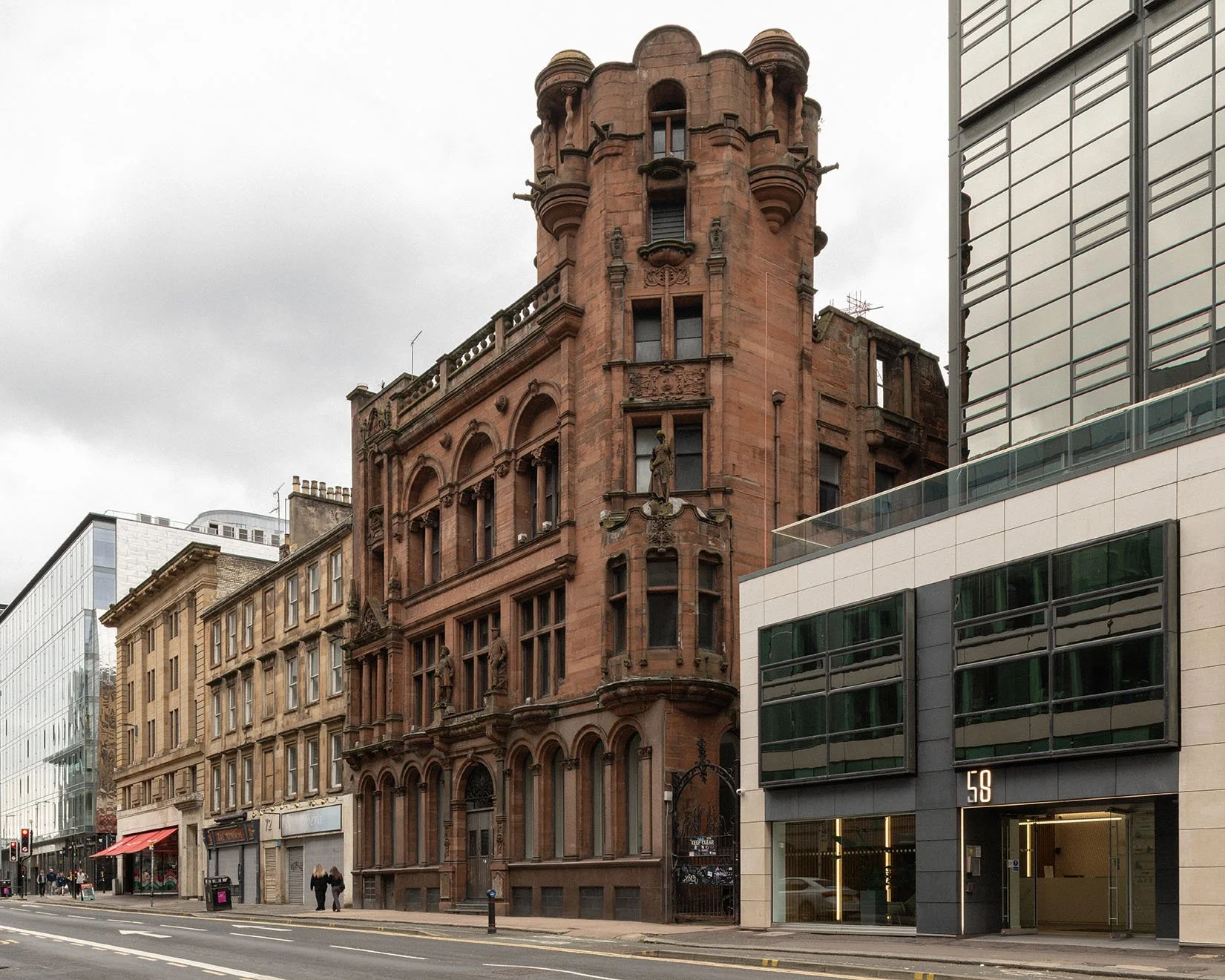
64 Waterloo Street, Glasgow.
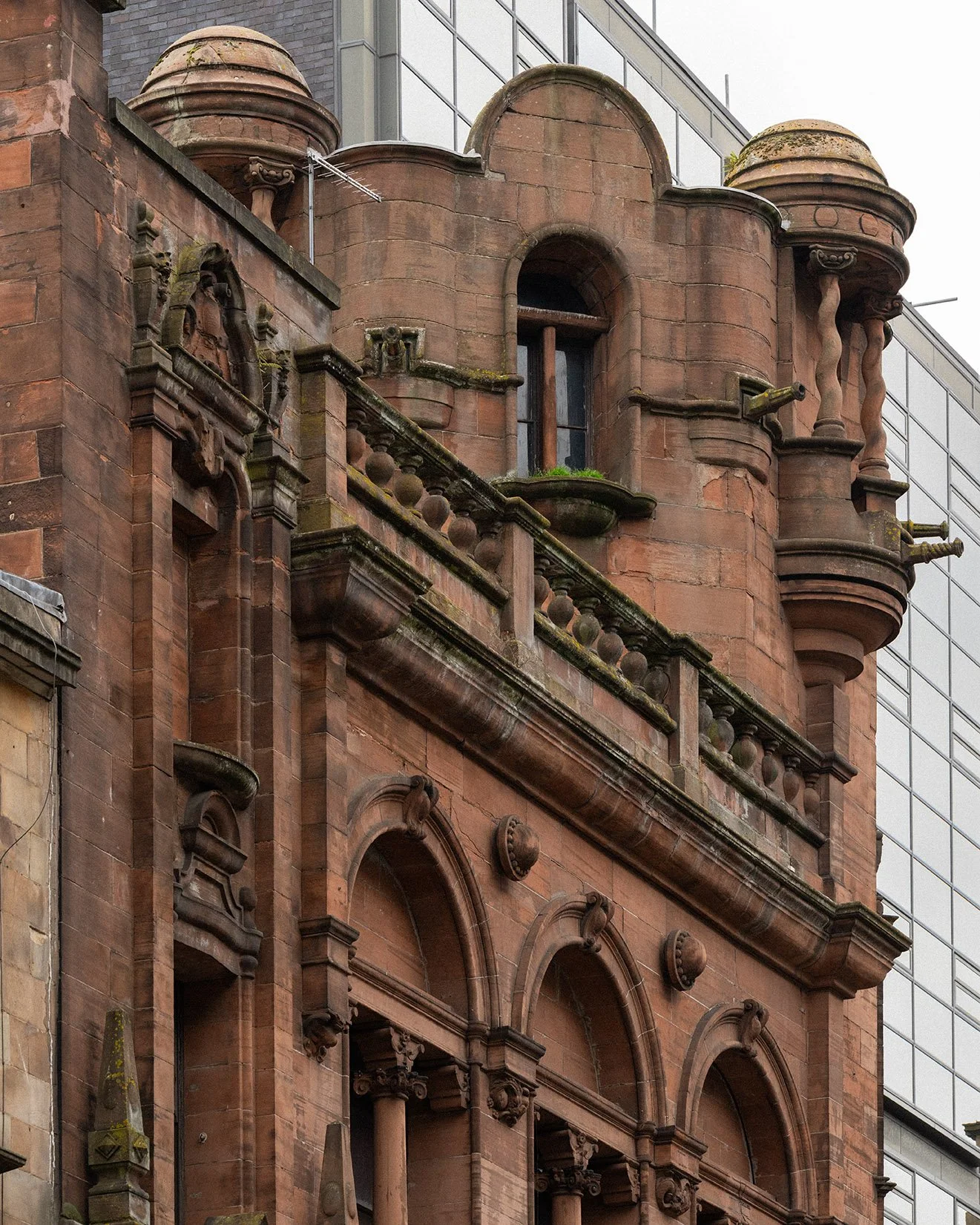
Chances are most folk waiting for their bus across the road from this building don’t pay it too much attention. Those that glance up and do take notice are probably then intrigued. What is this remarkable red sandstone building? Who are the white eyed statues? What are those twisty column details and why are there cannons sticking out the top?

The answer is James Chalmers’ Distillers Building, designed and built for whisky merchants Wright & Greig in 1898.
The magnificence of the facade gives some indiciation of how prosperous the whisky business was in Glasgow in the late 19th Century.
Wright & Greig were founded in Glasgow in 1868. Initially occupying premises on Cadogan Street, they later wished to have their own purpose built premises to include warehousing, blending rooms and office space. It’s hard to imagine now, but at that time central Glasgow was full of bonded warehouses containing large quantities of high proof spirit in casks. This practice was still in place up until the mid 20th Century when changing logistical needs of distillers and a series of fatal fires put an end to the mass storage of whisky within built up urban areas.
With the recent devestating fire on Union Street and the speculation around regulation (or lack of) of the storage of large quantities of e-cigarettes in retail units, it seems there may be a parallel thread to be pulled on here…
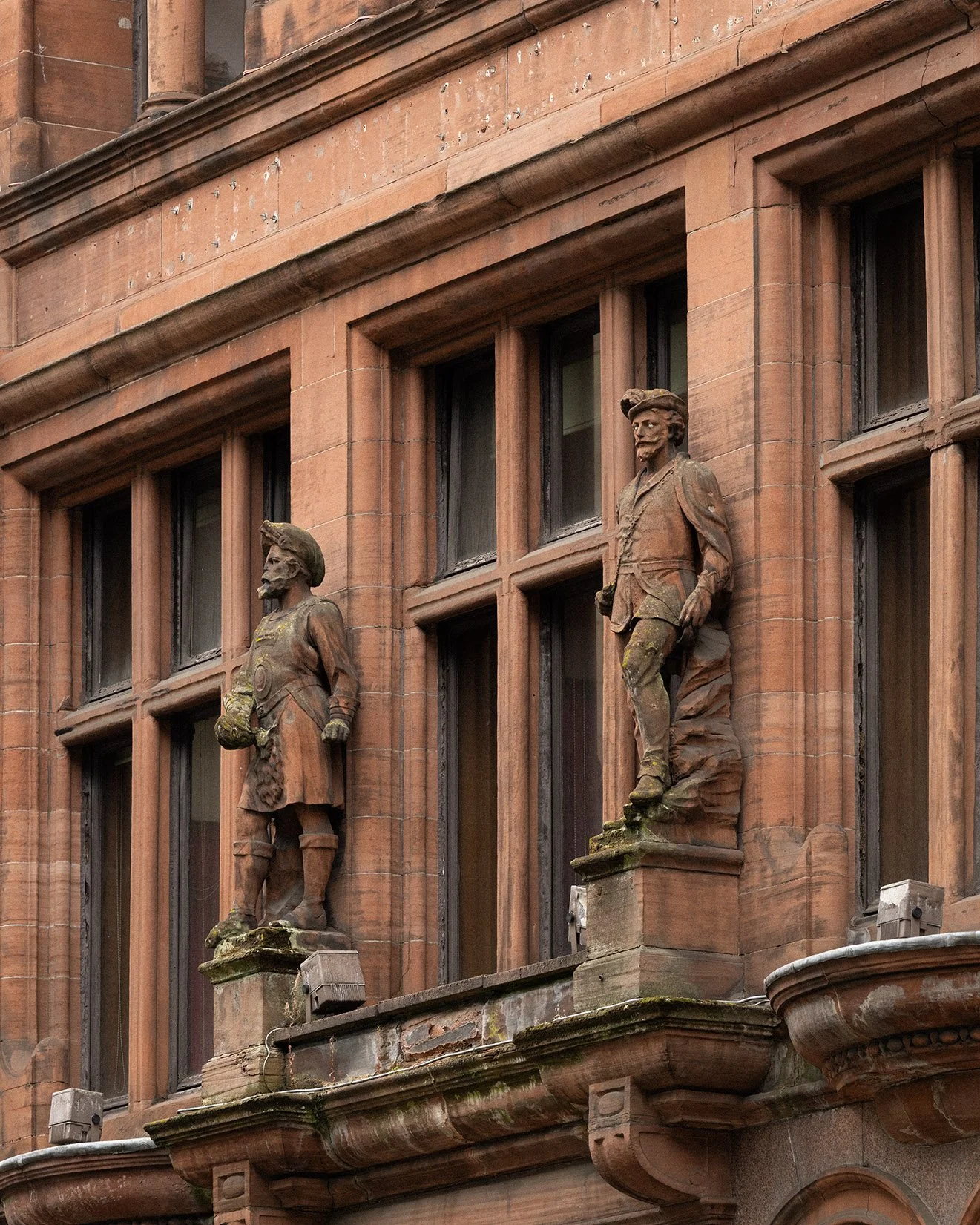
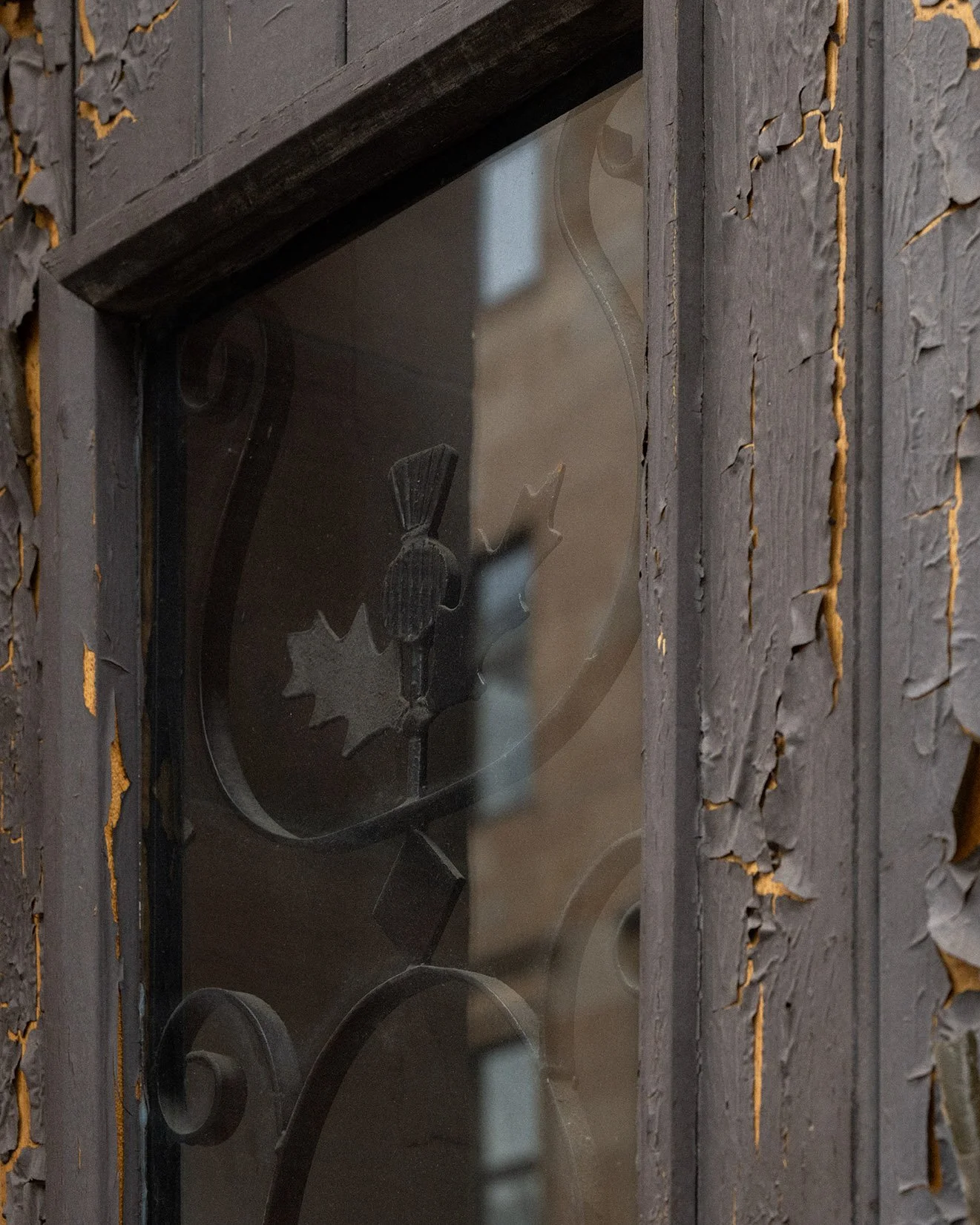
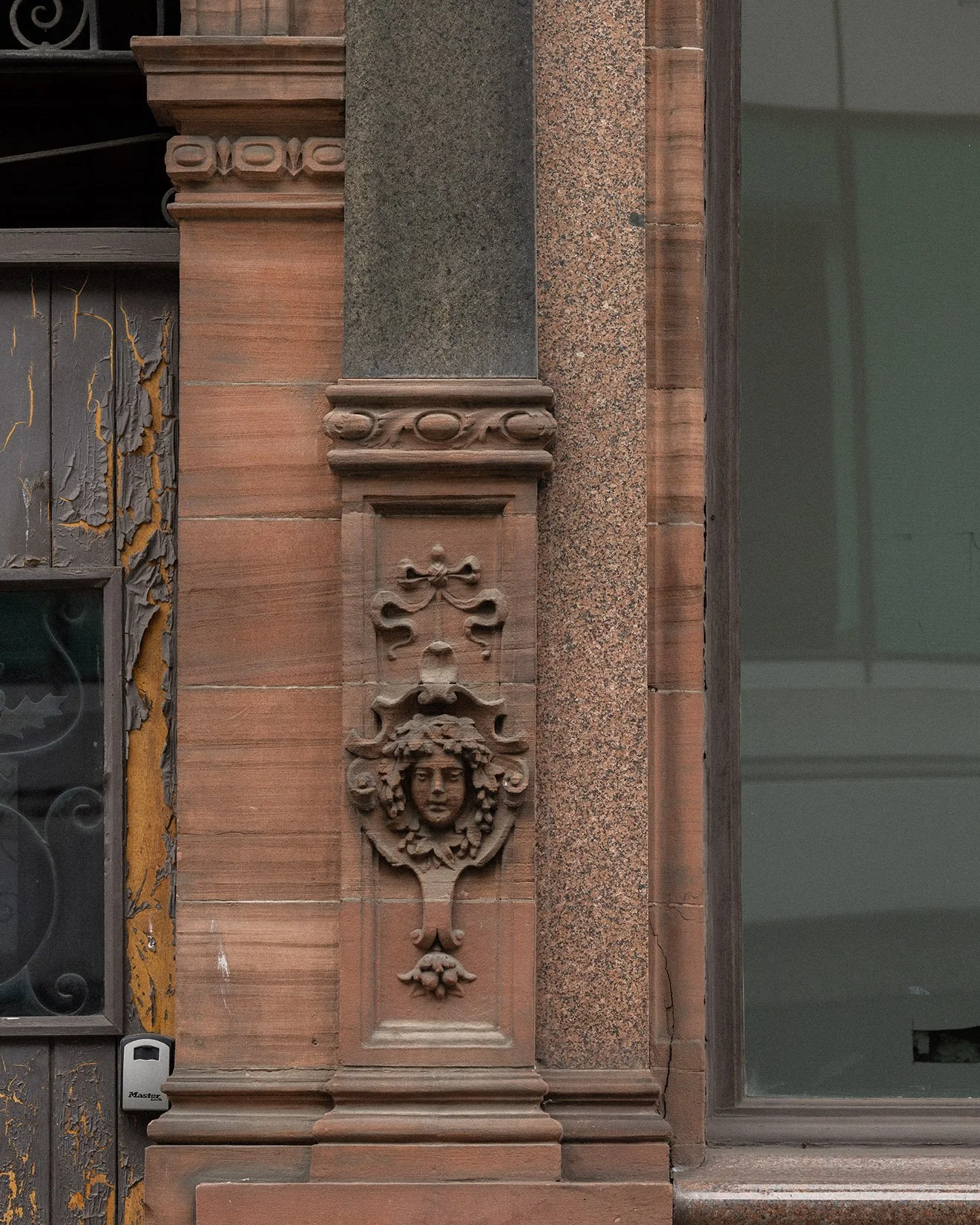
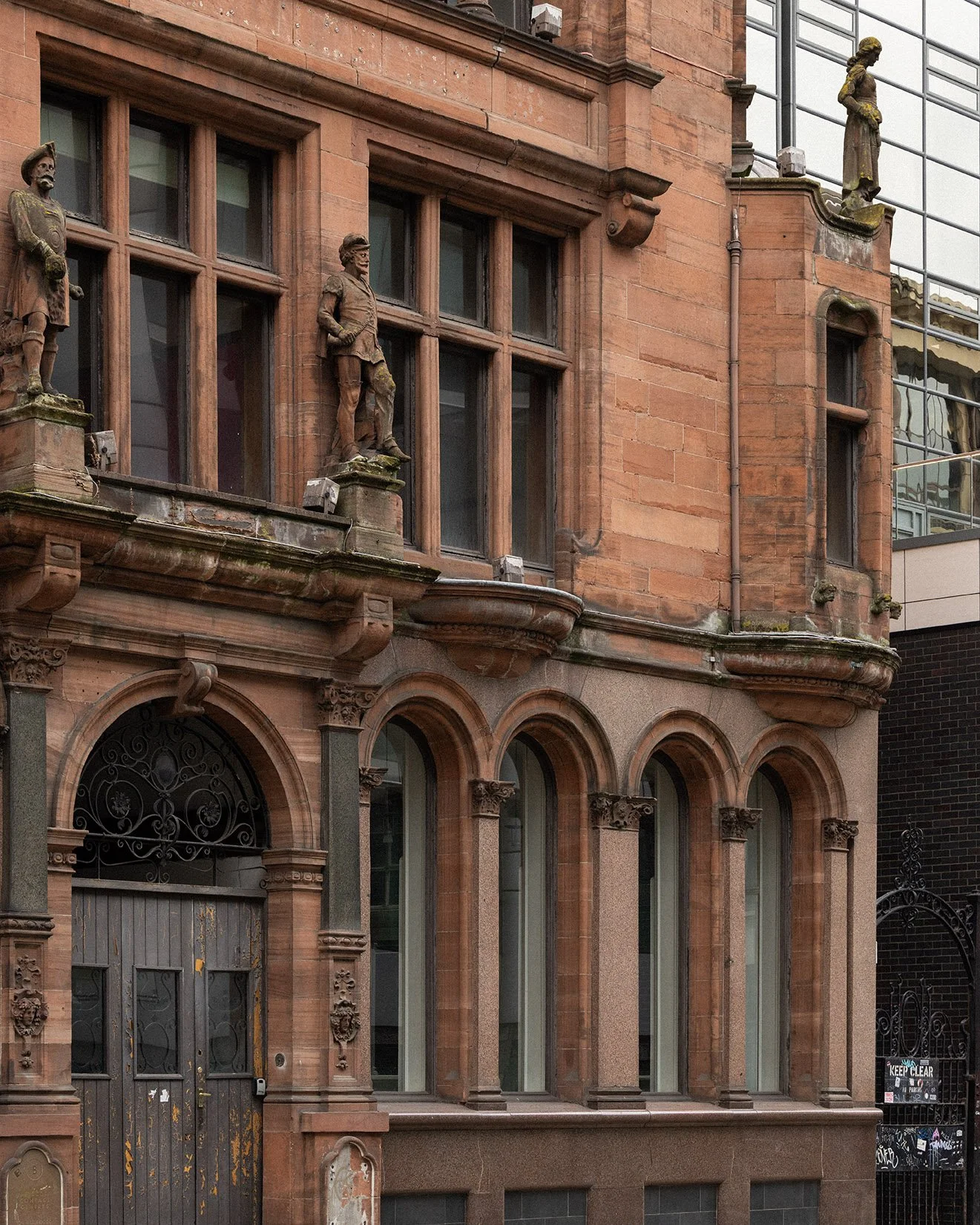
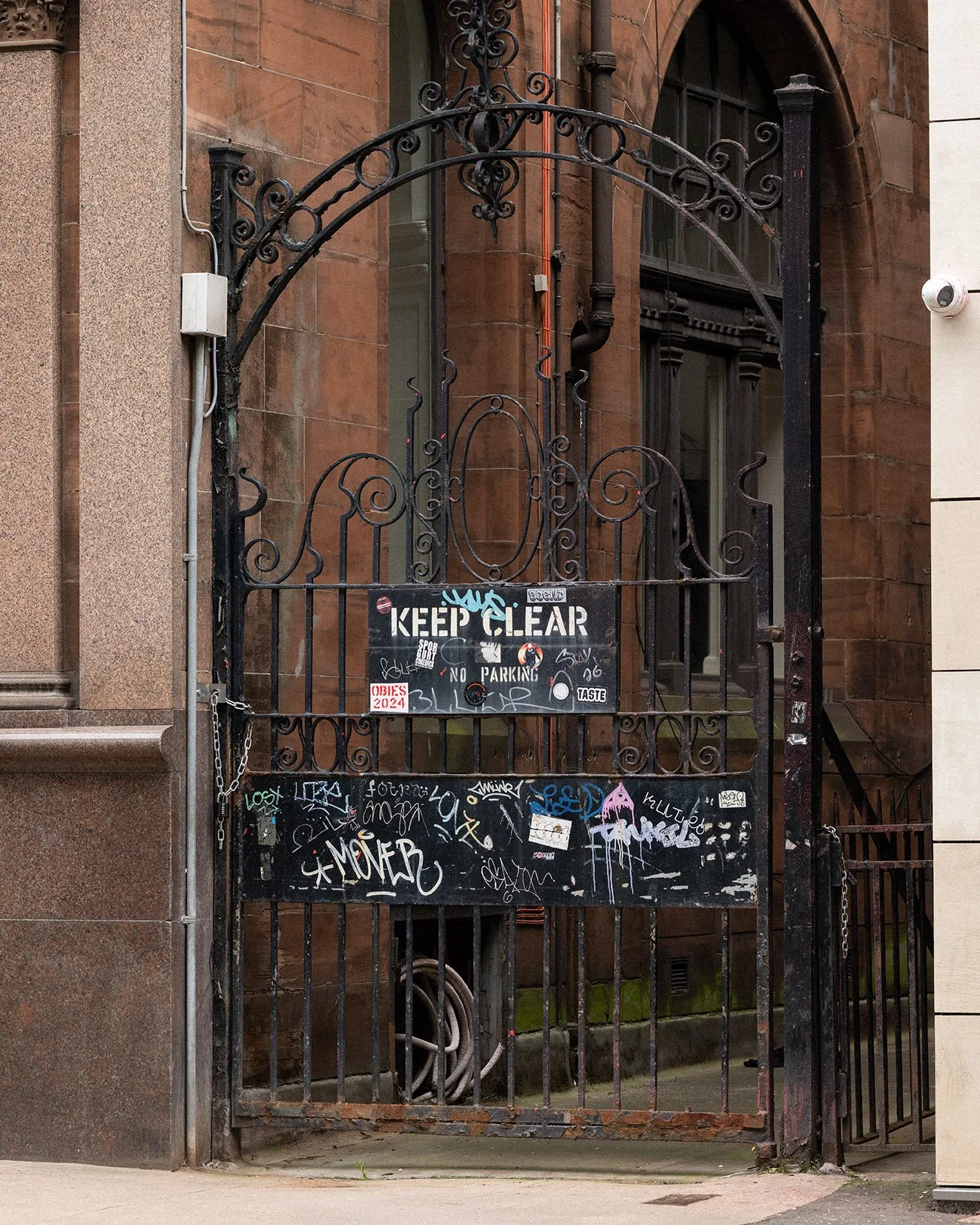
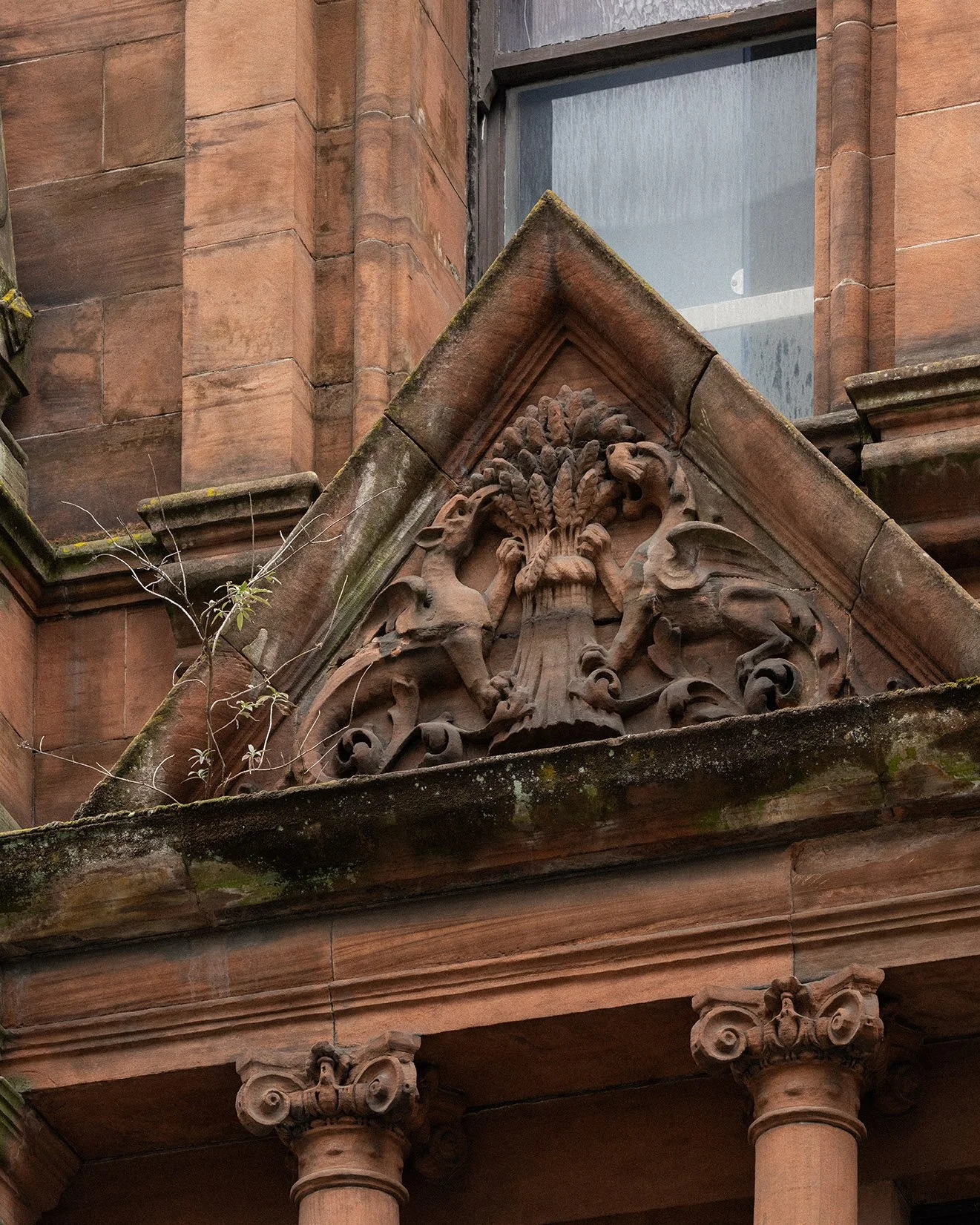
Anyway! The Distillers Building is fascinating to look at. Adorned with all sorts of intricate carvings and architectural details, the most notable of which are a series of statues.

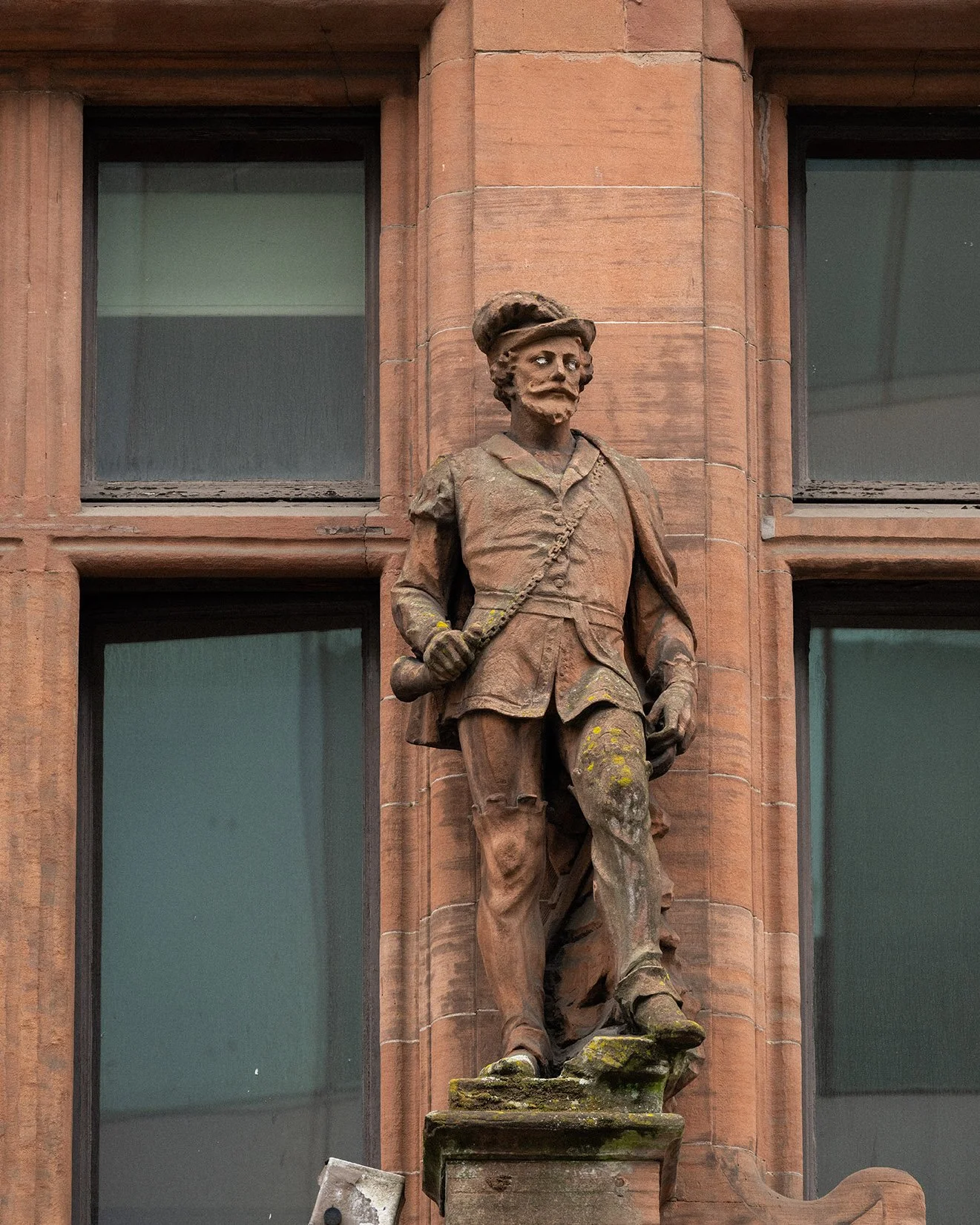

At the time of construction Wright & Greig were most well know for their flagship blend Rhoderick Dhu. Rhoderick Dhu was a historical character in Walter Scott’s famous poem ‘The Lady of the Lake’ published in 1810. As such he is immortalised above the impressive entrance to 64 Waterloo Street alongside James Fitz-James, and Ellen Douglas, also notable figures from the poem.

The ironwork detailing above the entrance as well as at the gate to the side are both fantastic. Towards the top of the building are columns intended to mimic barley sugar as well as the aforementioned cannons. If you look closely to the top right of the first image on this article you can see that the building was never fully completed. The balcony area was apparently intended to feature statues of the seasons.

In time honoured fashion Wright & Greig made the move from blenders and bottlers to becoming distillers outright with the acquisition of the newly built Dallasmore distillery in 1899, which they duly renamed Dallas Dhu. Unfortunately what with the turbulent start to the 20th Century for the whisky industry, Wright & Greig went into voluntary liquidation just 20 years later in 1919. The assets were subsequently acquired by The Distillers Company whose ghost sign can still be seen above the door on Waterloo Street.

I’m quite fond of this era of naff whisky marketing so picked up both of these at auction. The whisky was bottled for Historic Scotland who were custodians of Dallas Dhu after it closed in 1983. From 1988 to 2024 the distillery was open as a musem with much of the mid 20th Century equipment still intact.


Like many of Glasgow’s great historical buildings 64 Waterloo Street currently sits empty. Even more disappointingly the building and it’s neighbours (previously home to the once great Admiral Bar) are scheduled for demolition to make way for yet more student accommodation. The Distillers Building is B-listed so the facade would be retained within the current plans, which is something, although this still feels like an impending loss of yet more of Glasgow’s architectural heritage.
In an ideal world I’d love to see this building re-purposed as some kind of Glasgow Whisky Museum complete with bar etc. Glasgow has such an important role in the history of Scotch Whisky but has no offering (outside of amazing whisky pubs) akin to Edinburgh for capitalising on whisky tourism. Something like this could be a real cultural asset for the city, intrinsically linked to the nearby Clyde, and all the fascinating stories it has to tell, yet firmly looking toward the future of whisky in Scotland.
Given Glasgow’s seemingly poor track record in cultural / architectural preservation, the above doesn’t seem likely but we can but dream.
For the meantime we can still wander along Waterloo Street and marvel at this piece of Glasgow’s whisky history.
For now.
If you’re interested in further reading on the statues featured, check out this great article by Secret Scotland.